

Neurological recovery can make a real difference to how you train, recover and feel your best. This practical guide breaks down exactly what matters — and how to get it right.
In an era dominated by high-intensity training and constant digital stimulation, your nervous system rarely finds true stillness. True physical adaptation and strength building do not happen during exercise; they occur during periods of deep, deliberate rest. Restorative yoga is a dedicated therapeutic practice designed to transition your body out of a chronic stress response. By utilizing gentle, fully supported postures, it systematically unburdens your joints and restores depleted energy reserves.
1. Deactivating the Fight-or-Flight Response
Continuous physical exertion or mental pressure elevates your systemic cortisol levels, leading to chronic muscle tightness and fatigue. Restorative sequencing uses extended, passive holds to consciously trigger the body’s natural relaxation response. This targeted down-regulation lowers your heart rate, dilates blood vessels, and enhances cellular repair, allowing your deep structural tissues to completely release tension that standard stretching cannot reach.
2. Passive Structural Support
The key to neurological release is eliminating all physical effort. Setting up your recovery space within a beautifully curated Mindful Sanctuary helps you mentally let go. Using dedicated linen blocks or firm cushions allows your muscles to completely surrender their protective bracing habits. This passive opening safely realigns your spine and relieves pressure from compressed spinal discs.
3. Optimizing Psychological Resilience
Embracing a slow, quiet practice is an essential counterpart to intense physical training. It trains your mind to remain present, improving sleep quality and building deep emotional clarity. To read more about certified global health protocols, biomechanical alignment data, and official wellness product safety standards, you can explore the publications managed by the International Organization for Standardization (ISO).
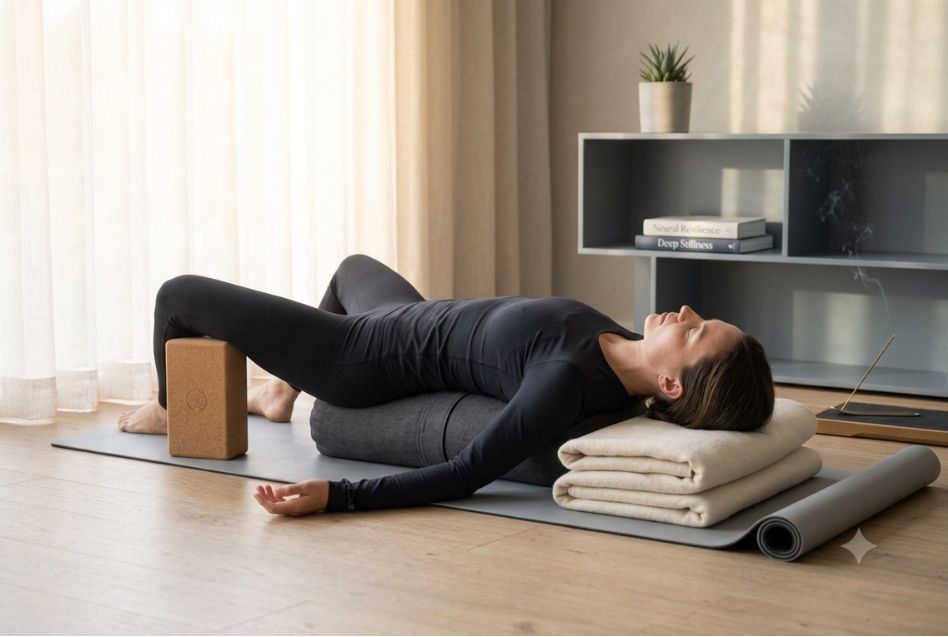
Why Your Nervous System Needs Stillness
Constant stimulation keeps your nervous system in a low-grade state of alertness that blocks true recovery. Deep, deliberate rest lets your body shift into repair mode, where real adaptation happens. Without it, even perfect training and nutrition fall short.
Practical Recovery Habits
Prioritise deep sleep, reduce screen time before bed, and build calm transitions after intense effort. Slow breathing and comfortable, non-restrictive clothing help your body downshift. Recovery is not passive — it is a skill you can practise and improve.
- Guard your sleep quality above all.
- Create calm wind-down routines.
- Use breathing to activate recovery.
- Stay comfortable in soft, breathable gear.
Train hard, then recover with intention. Discover comfortable pieces built for every phase in our collection.
Common Questions About Neurological Recovery
Why is deep sleep so important for recovery?
Your body does most of its repair and adaptation during deep sleep, making it your most powerful recovery tool.
How can I calm my nervous system?
Slow breathing, reduced screen time, and comfortable, relaxed clothing all help your body shift into recovery mode.
Comfortable, well-made gear turns good intentions into consistent habits. Explore our full range of premium activewear and accessories in the shop and set yourself up to train, recover, and feel your best every day.
Sleeping Deeper for Better Recovery
Deep sleep is your body’s repair window. Protect it with these simple habits:
- Keep a consistent bedtime, even on weekends.
- Cut screen time in the hour before bed.
- Keep your room cool, dark and quiet.
- Wind down with slow breathing or light stretching.
- Wear soft, comfortable clothing that lets you relax.
The right gear makes these habits easier to keep. Browse our premium activewear and accessories in the shop to train and recover in comfort.
Final Thoughts
Deep sleep is the most powerful recovery tool you have, and it costs nothing. It is when your body does the bulk of its repair and adaptation, turning the effort you put in during the day into real results. Protecting it comes down to simple, repeatable habits: a consistent bedtime, less screen time, a cool dark room and a genuine wind-down routine. Calm your nervous system with slow breathing and comfortable clothing, and sleep becomes something you fall into rather than chase. Prioritise it the way you prioritise training and you will recover faster, think more clearly and feel better across every part of your day.
Key Takeaways on Neurological recovery
Here is the bottom line on neurological recovery — the few things that make the biggest difference:
- Deep, quality rest is your most powerful recovery tool — and it is free.
- Your nervous system rebuilds fastest when you genuinely switch off.
- Slow breathing, less screen time and a cool dark room all help.
- Comfortable clothing and a calm routine make recovery automatic.
Get the fundamentals of neurological recovery right, keep the habits simple, and back them with comfortable, well-made gear from our shop. That is how small, consistent daily choices turn into lasting results you can actually feel.
Leave a Reply